Welcome to Private Creative Coaching
I work one-to-one, with people who have been successful in other fields for most of their professional lives, and want to return seriously to making art.
For most of the people I work with, art was once important, but was put aside while careers and other responsibilities took precedence.
Many reach a point where they want to return to drawing, painting and thoughtful making in a way that suits their time and temperament.
What this is
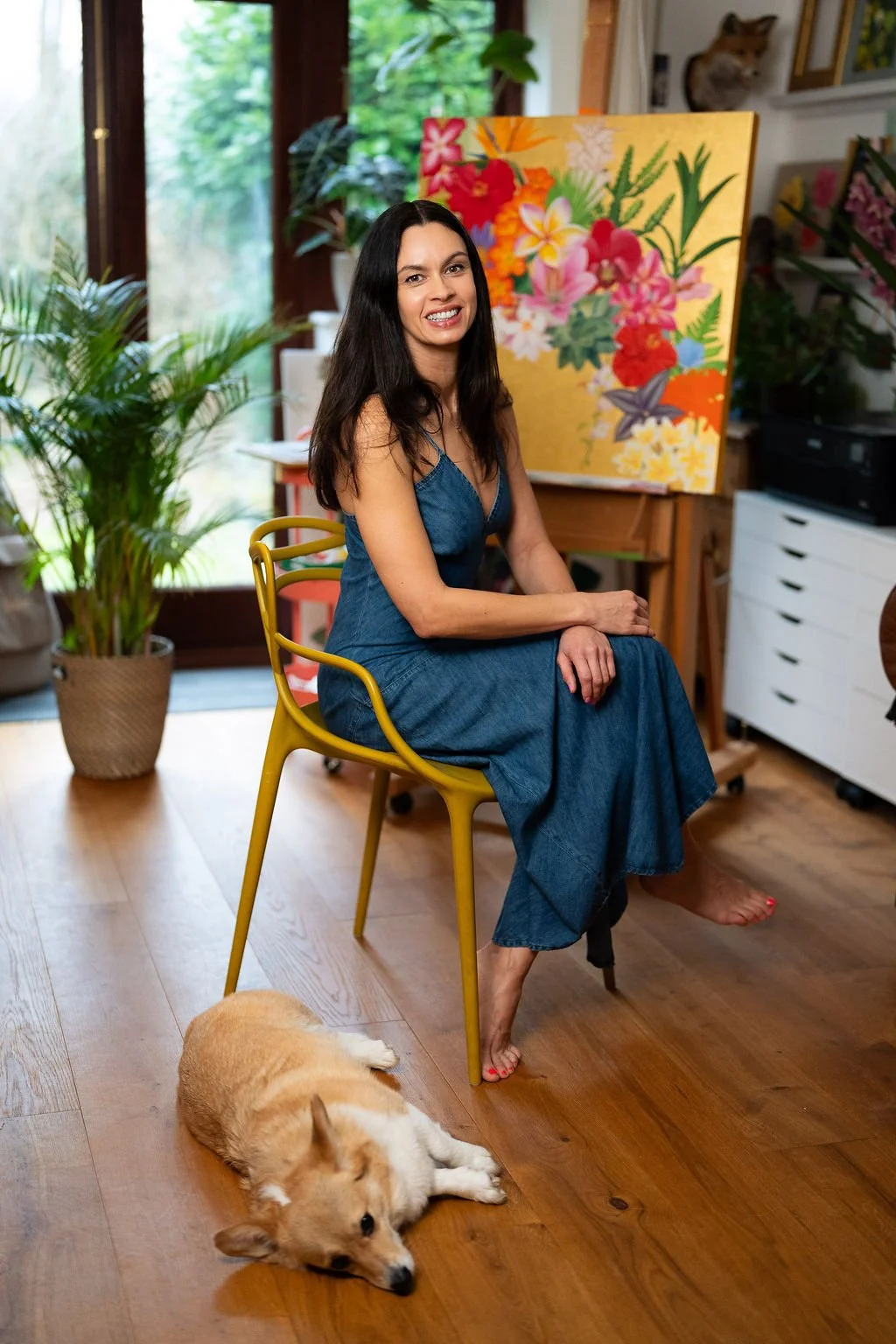
This is private, one-to-one creative coaching.
It is not a class, and it is not group-based. There is no fixed syllabus, and no pressure to perform.
The work is shaped around you as an individual: your history with art, your available time and what you want this practice to be now and for your future self.
Depending on the person, the focus may include:
rebuilding confidence in drawing and seeing
painting and material understanding
developing visual language
finding a personal direction that feels honest and sustainable
establishing a creative practice that fits alongside your real life
The emphasis is on attention, skill and continuity - not productivity or output.
Who this is for
These sessions tend to suit people who:
Are accomplished in other areas of life
Are thoughtful, private and self-directed
May be time-poor, but value depth and quality
Prefer focused attention to their own development & pace of learning
Who once cared deeply about making art and now want to take it up again intentionally
Do not want to attend classes or work in groups - either not ever, or not yet.
Many of the people I work with are senior professionals, founders or coming to the end of long careers, and feel the time is right to reignite that passion for something they always intended to return to.
How it works
I work in focused, one-to-one sessions lasting 90 minutes.
Sessions are calm and practical. We may draw, paint, look at work together, or talk through questions of direction or practice - always grounded in making rather than abstraction.
Sessions are purchased in blocks, allowing the work to develop without rush or pressure.
Sessions take place in person or online (in person: to your venue of choice within a commutable distance from my studio in Silchester, Hampshire, or at my studio.

What we work on
The work is always shaped around the individual, but these are some common examples of things to learn:
Learning how to see accurately
Training the eye to notice proportion, alignment, relationships and subtle shifts - rather than relying on memory or assumption.
Composition and visual structure
Understanding how images hold together: balance, weight, rhythm, and tension, without relying on formulas or rules.
Working from life
Using direct observation as a way of sharpening attention and judgement, and learning how to work with change rather than control it.
Drawing as a thinking tool
Using drawing to test ideas, clarify perception, and slow decision-making. Using it as a foundational tool beyond the pencil.
Developing a personal visual language
Moving beyond copying or exercises towards work that feels owned, coherent, and recognisably yours.
Establishing a sustainable practice
Building a way of working that fits alongside professional life: realistic, disciplined, and free from unnecessary pressure.
Understanding materials
Developing confidence with paint, surface and tools. Knowing how materials behave, and how to work with them rather than against them.
Digital tools
Learn how to use digital tools to enhance and support your creative practice.
Mixed media
Confidently use multiple different mediums together: pencil, ink, charcoal, acrylic paint, oil paint, gouache, watercolour, pastel, oil pastel, crayon, coloured pencil, collage.
Judgement and restraint
Learning when to add, when to remove and when to stop - an often overlooked skill that separates competent work from confident work.
Navigating uncertainty in the work
Learning how to stay with not knowing, and how to use doubt, revision, and adjustment as part of the process rather than obstacles.
What this is not
Art therapy
An evening class
A hobby course
A productivity framework
A route into the art world
This work is not about fixing, optimising or performing.
It is about returning to a creative practice, thoughtfully and seriously.
Fees
Sessions are 90 minutes.
The fee is £225 per session, online or in person (plus any travel costs incurred).
Engagements are arranged as a short series - pre purchased in blocks of 6 or 12 sessions.
Light support is available via WhatsApp between sessions to support continuity and practical decision-making as the work develops.
I work with a limited number of people at any one time alongside my own creative practice.
Extended immersion
For some people, working in longer, uninterrupted blocks is more useful. Half-day, full-day, and short immersion periods are available by arrangement.
About me
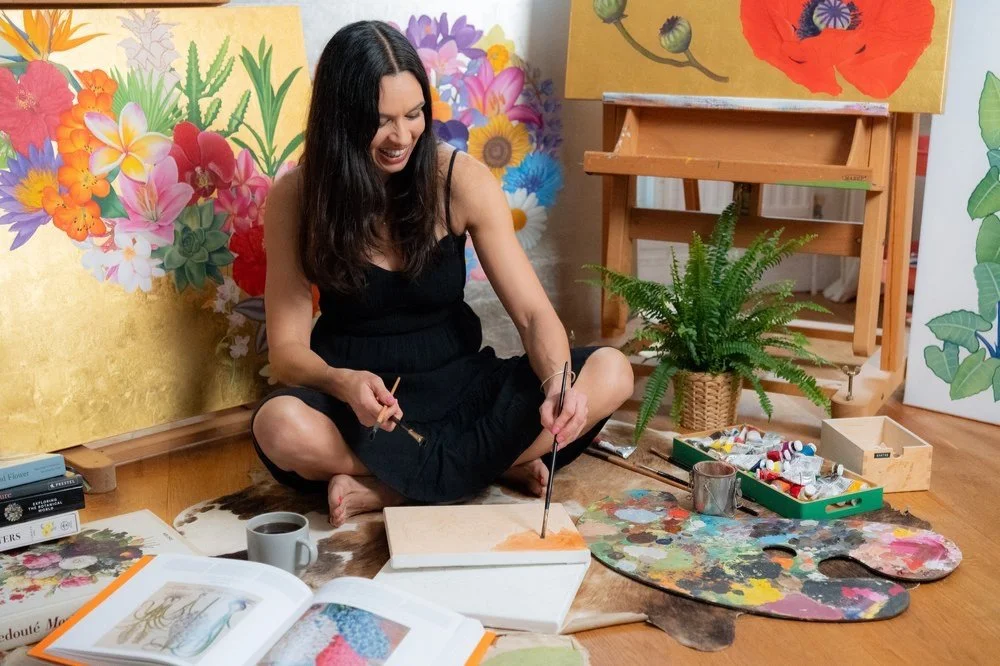
I am a practicing artist with a long-standing studio practice, alongside experience with teaching, delivering workshops and mentoring.
I have worked in a corporate context providing creative consultancy. Through that work, I spent time with senior professionals who were thoughtful, articulate and highly capable, and who often spoke about having set aside creative ambitions earlier in life.
Private Creative Coaching grew out of those conversations.
I work calmly, directly, and with respect for people who are used to thinking independently and holding themselves to high standards. The work draws directly from my own way of working: attentive, skill-based, and building solid foundations grounded in practice and understanding.
The benefits of creativity in your life is backed by research you’ve likely read or heard about…
-
Engagement in cognitively stimulating activities, including drawing and visual art, is associated with a reduced risk of dementia and slower cognitive decline.
Source: Su et al., Journal of Neurology, Neurosurgery & Psychiatry (2022).
-
Regular participation in visual arts is associated with improved emotional wellbeing, life satisfaction, and sense of meaning, particularly in mid and later life.
Source: World Health Organization, Evidence Review (2019).
-
Creative activities such as drawing and making are linked to reduced stress, improved emotional regulation, and lower symptoms of anxiety and depression.
Source: Fancourt & Finn, WHO / UCL (2019).